
海上钢琴师
Eight major polysilicon producers in China pledge to avoid below-cost sales amid ‘anti-involution’ push_我的网站

一 | 讯 据国家金融监督管理总局消息,为有效治理非车险市场无序竞争,部署长效化治理举措,积极构建规范化、专业化、精细化的非车险市场体系,促进财险业高质量发展,近日国家金融监督管理总局发布《非车险综合治理行动方案》(以下简称《方案》)。
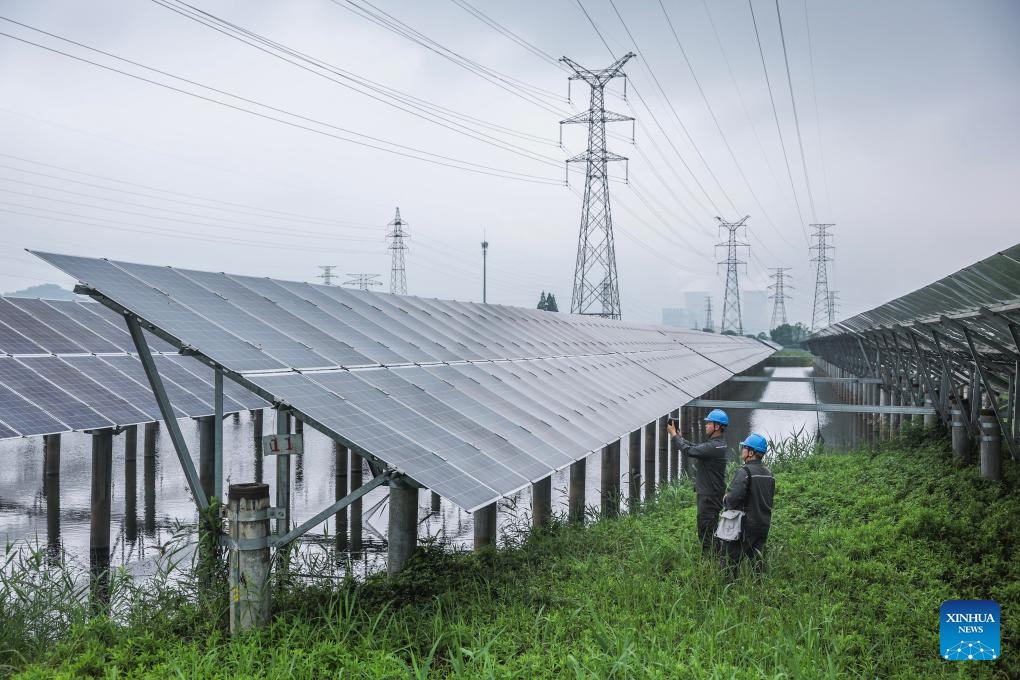
Eight Chinese leading polysilicon producers have issued public pledges to stop selling solar products below a cost benchmark, in a fresh industry effort to curb "involution-style" competition and support healthier pricing in the country's photovoltaic supply chain, the Shanghai Securities Journal reported on Friday.
Industry experts said that this move will not only help stabilize profits across the sector, but also promote the Chinese photovoltaics (PV) industry's shift toward high-quality development.
The eight companies jointly committed that the selling prices of all photovoltaic products, including tender bids, must not fall below the corresponding cost calculated under the group standard General Principles for Cost Accounting Models in the Photovoltaic Industry. Any sales below full cost must be "immediately stopped and corrected," according to the report.
The pledge was signed in Shanghai on Thursday by the companies, including four listed companies — Tongwei Solar Co, GCL Technology Holdings Limited, Daqo New Energy Co, Xinte Energy Co. The other four companies are Asia Silicon (Qinghai) Co, Xinjiang East Hope New Energy Co, Qinghai Lihao Qingneng Co, and Xinjiang Goens Energy Technology Co.
Together, the eight companies account for more than 90 percent of China's effective polysilicon production capacity, the Shanghai Securities Journal report said.
Under the initiative, the companies also agreed to accept supervision and inspections from market regulators at all levels and to strengthen mutual oversight. If they discover illegal below-cost sales, they are required to report the issue and file complaints with the industry association and the State Administration for Market Regulation (SAMR).
In addition, the firms committed to strictly implementing China's new energy-consumption standards and to proactively eliminate outdated, high-energy-consuming production capacity.
The move comes just one week after the SAMR held a solar industry price-compliance meeting on July 31, urging solar PV companies to strengthen price compliance and shift competition from price to quality.
It instructed companies to strengthen cost accounting, establish and improve price compliance systems, and carry out comprehensive self-inspections and corrective actions, according to the Xinhua News Agency.
Industry experts welcomed the initiative, saying that years of excessive competition have pushed many photovoltaic firms into losses, which is harmful to the industry's long-term development.
China's PV industry is mired in severe low-price competition, with profit margins squeezed along the entire value chain and many firms operating at a loss, Xiang Ligang, director-general of the Zhongguancun Modern Information Consumer Application Industry Technology Alliance, told the Global Times on Friday.
Xiang added that the initiative could help ensure more reasonable revenue and profit levels, which are essential for sustainable industrial development. The move also reflects a broader shift among Chinese firms toward greater coordination in responding to market pressures.
Although the industry also faces external challenges, including US tariffs on polysilicon-related products, Xiang said the main purpose of the initiative is to improve the sector's own development model rather than simply respond to foreign trade measures.
China has launched sweeping efforts to curb "involution-style" low-price competition and accelerate the phase-out of outdated industrial capacity. China's Ministry of Industry and Information Technology on July 3 held a symposium for manufacturing enterprises, focusing on accelerating the high-quality development of the photovoltaics industry, according to the Xinhua News Agency.
The symposium called for efforts to comprehensively deal with the problem of disorderly price competition in the photovoltaics industry in accordance with laws and regulations, as well as efforts to guide enterprises to improve product quality, phase out backward production capacities in an orderly manner and achieve healthy and sustainable development, Xinhua reported.
。

二 | 《方案》延续《关于加强非车险业务监管有关事项的通知》的严监管强监管要求,立足非车险业务的多样性、复杂性,明确监管要求的实施路径、治理方向。 《方案》共六个部分,一是总体要求。

三 | 聚焦非车险领域突出问题和风险,开展源头治理、深层治理、系统治理,坚持问题导向、分类施策、先立后破、稳步推进的原则,持续完善管理制度体系,有效提升市场主体经营能力,加快构建良好行业生态,进一步夯实非车险业务高质量发展基础。二是强化产品源头管理。构建监管指导、公司主责、行业配套的产品管理体系,以产品源头规范促进市场规范。三是推动业务稳健经营。聚焦非车险风险暴露的主要领域,强化对市场主体的行为监管,推动非车险合规经营、有序竞争。

四 | 四是夯实系统数据支撑。

五 | 推动数据标准统一、系统平台建设、数据积累应用,为科学经营和精准监管提供有力支撑。

六 | 五是规范中介业务行为。加强保险中介机构、互联网平台保险业务、保险公司管理责任等关键环节管控。六是加强治理保障措施。明确监管、机构、行业组织各方职责,形成上下联动、横向协同的落实机制;深化部门协同,加强总结宣传;建立评估与反馈机制,根据市场变化和实施效果及时完善政策措施。

七 | 下一步,国家金融监督管理总局将指导各派出机构、行业组织、财产保险公司和保险中介机构做好《方案》落地实施,有序开展非车险产品重新备案,建立健全非车险行业规则与基础管理制度,持续深化业务风险管控与流程优化,引导市场主体错位发展,推动非车险业务高质量发展。版权申明:凡注有“”或电头为“”的稿件,均为独家版权所有,未经许可不得转载或镜像;授权转载必须注明来源为“”,并保留“”的电头。 。
Current article:http://fjdl8h.xiaqingzhuangdaminnan.cyou/ucluoa/kxi.html
Published on:15:02:32


1
事关核聚变 多家A股上市公司入局!中国环流四号建设提速2
China striving to ensure good start to 15th Five-Year Plan period: official3
骑士官宣佩顿-沃特森加盟 沃特森将身披8号球衣4
【教师加油站】探索科学奥秘,奏响艺术乐章—西安未央悦墅幼儿园教师公开课观摩活动5
SSD价格太贵 Win11省点用吧:一个命令可节省大量C盘空间6
From chips to sunflower seeds and dumplings, Washington's sanctions tear away its own fig-leaf7
预计2028年建成!国际零磁谷这一重点项目开工8
武汉降温时间确定!9
把公交预约机搬进小区 杭州公交这条线路解锁预约新模式10
台湾台南市发生6.2级地震11
防御台风“沙德尔” 福建撤离渔船和海上人员12
场场首发,却用3战18中2回馈宫鲁鸣!球迷:这球商进什么国家队13
美防长隐瞒住院引争议,白宫回应:拜登不打算解雇他14
温和不刺激:韩束净润保湿洁面膏100g到手9.9元15
日本市民团体举办“日军毒气展”,揭露军国主义暴行!日本摄影记者称日本政府想把这段历史抹去;日本参观者称在学校里从来没学过这段历史
- 随机推荐
1
散热片释放水冷内存模块:冷RGB灯效果,37%降温2
从“好用”到“好生活”:安华卫浴登陆国家级平台,为大国人居提供新方案3
2026年服贸会环境与能源服务专题首次引入都市型现代农业内容,2026年服贸会环境与能源服务专题首次引入都市型现代农业内容4
2026年8月4日中网优能扣费,盼能退款处理5
远东股份:子公司拟2.16亿元收购富的旺旺80%股权6
结束20余年婚姻!明星夫妻承认已离婚7
福州市政协为闽江流域高质量发展聚智汇力8
Toxic: A Fairytale for Grown-ups; Makers Unveil 100 Days Countdown Poster9
2026年服贸会环境与能源服务专题展释放绿色产业新信号10
南通大学杏林学院昆韵予安实践团开展“寻迹名贤风骨,赓续泰州文脉”主题实践活动11
陈绿平来抚调研工会工作12
Earth Has No Plan of Action for 'Alien Arrival' Scenario, Astronomer Says13
最高15亿元!杭州市成功入选14
最强复仇者联盟!76人全员憋着一口气,新赛季每人心中都有执念15
「リブート」次回予告に一瞬 まさか長身女優に騒然 突然の衝撃結婚から11年「おった!?」「出てくるの!?ただの奥さんなわけが」「久しぶりに見た」